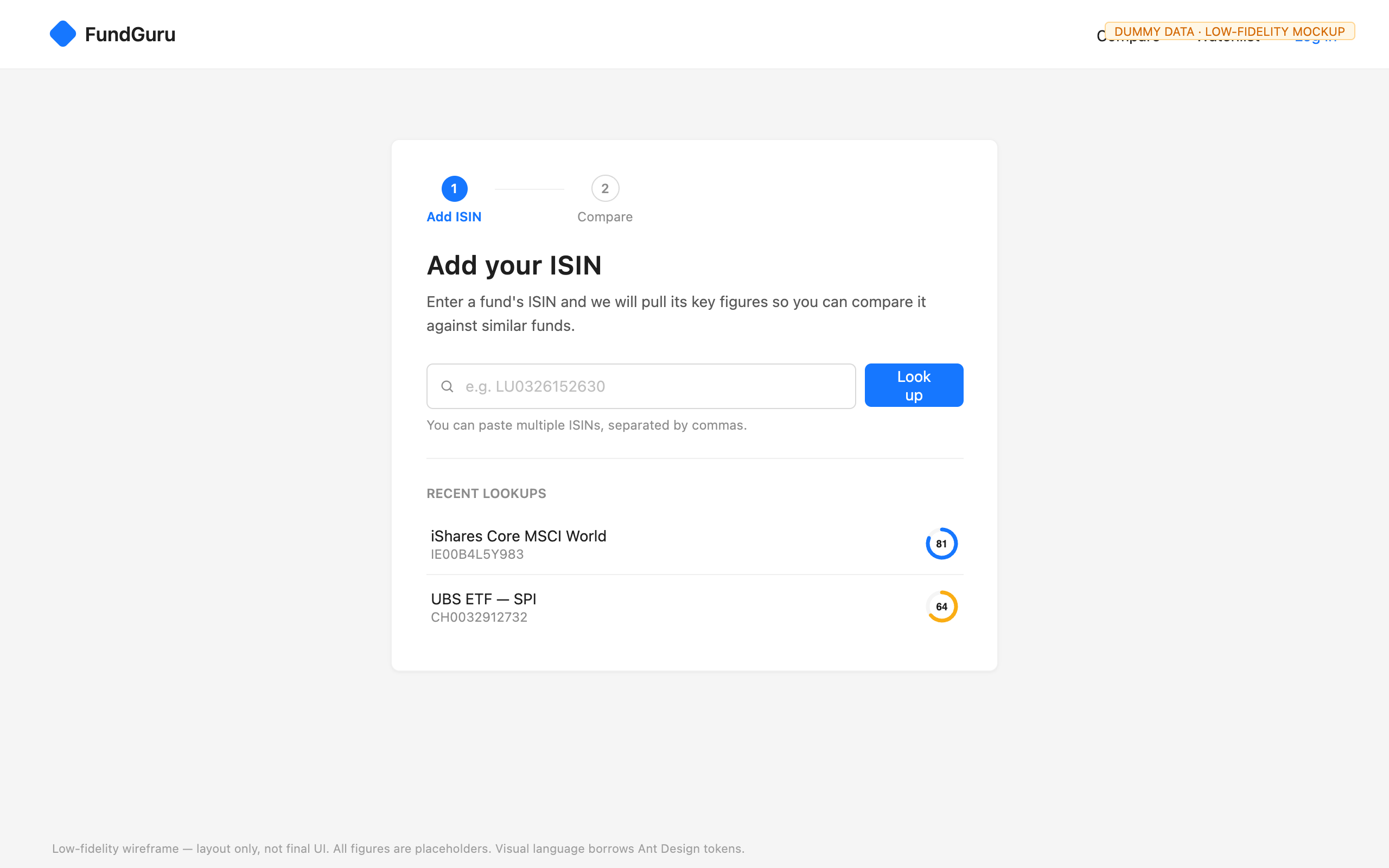
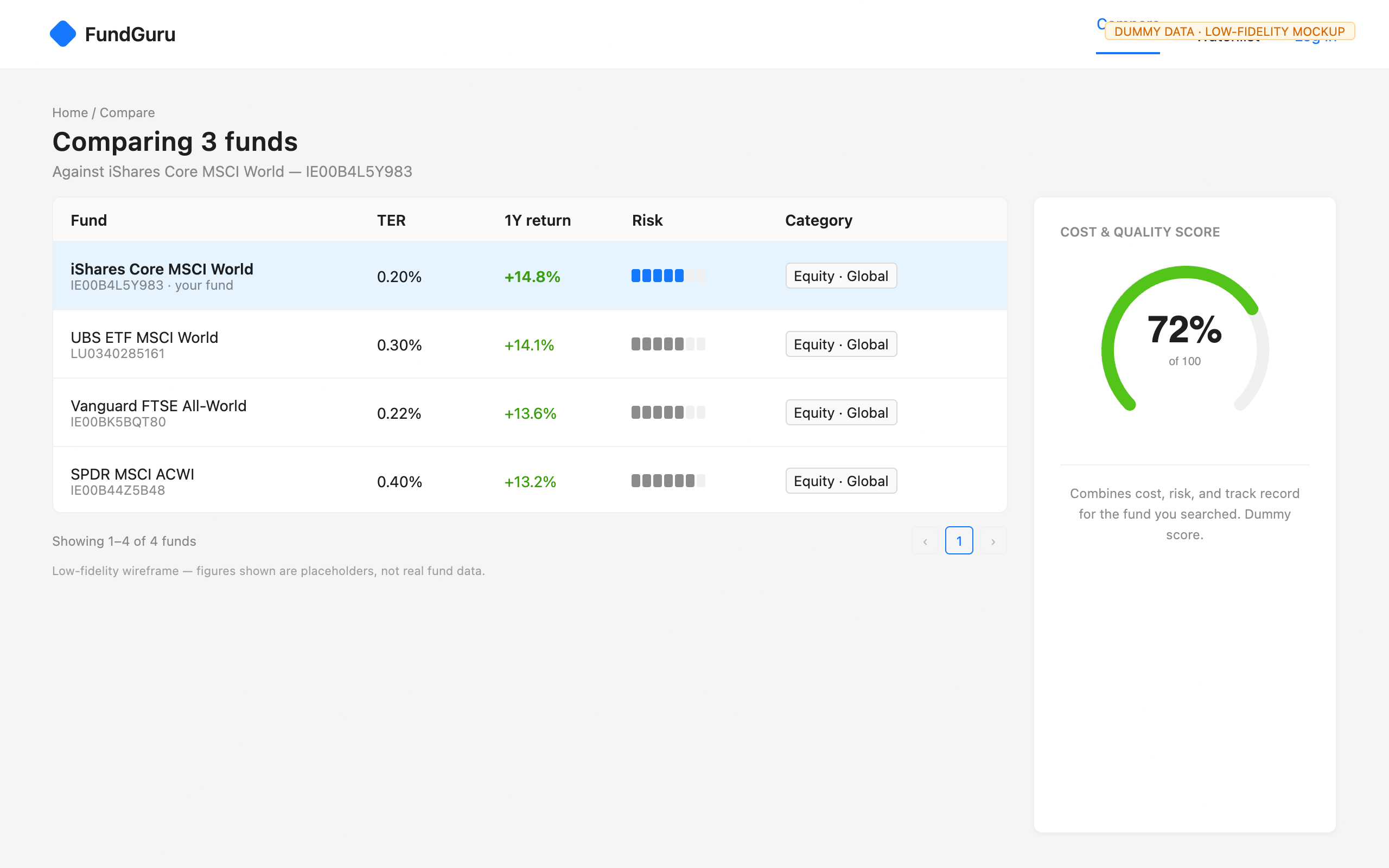
Fundguru began as a performance overview of actively managed funds, later extended to ETFs and passive funds, and was built with two quant engineers together with external design and development partners for the frontend. Only the backend ultimately stuck: it is still used by select financial service providers to generate regular reports for pension funds, comparing actively managed funds against benchmarks, while the frontend is no longer in use.
Why active funds resist comparison
Actively managed funds are notoriously hard to compare, since there is rarely a clear, shared benchmark against which to measure them. Fundguru set out to build a performance overview that addressed this, first for actively managed funds and later for ETFs and passive funds as well.
Clustering as a substitute benchmark
AAAccell built a clustering algorithm on MSCI fund data, a method that groups items by similarity, in this case grouping actively managed funds by similar underlying assets. The fund groupings were exposed behind an API, alongside benchmark metrics such as drawdown and volatility. In addition, reports were provided as documents to financial service providers.
A first product, and a first set of responsibilities
Fundguru was the first product I worked on, which meant a first kanban board, first commercial conversations and a first product-owner position, all acquired hands-on. As primary business owner, my responsibilities can be grouped as (1) supporting commercial activities, including a first overseas closing from Asia; (2) coordinating the relationship with the external software company that built the frontend; and (3) working with the two quant engineers and the design partner on the product itself.
What lasted
In practice, only the backend ended up sticking, and the frontend was dropped. The backend remains in use today by select financial service providers, which generate regular reports for pension funds that compare actively managed funds against benchmarks. My reading is that the durable asset was the analytical layer, the clustering and the benchmark metrics behind the API, rather than the interface built on top of it.
Wireframes