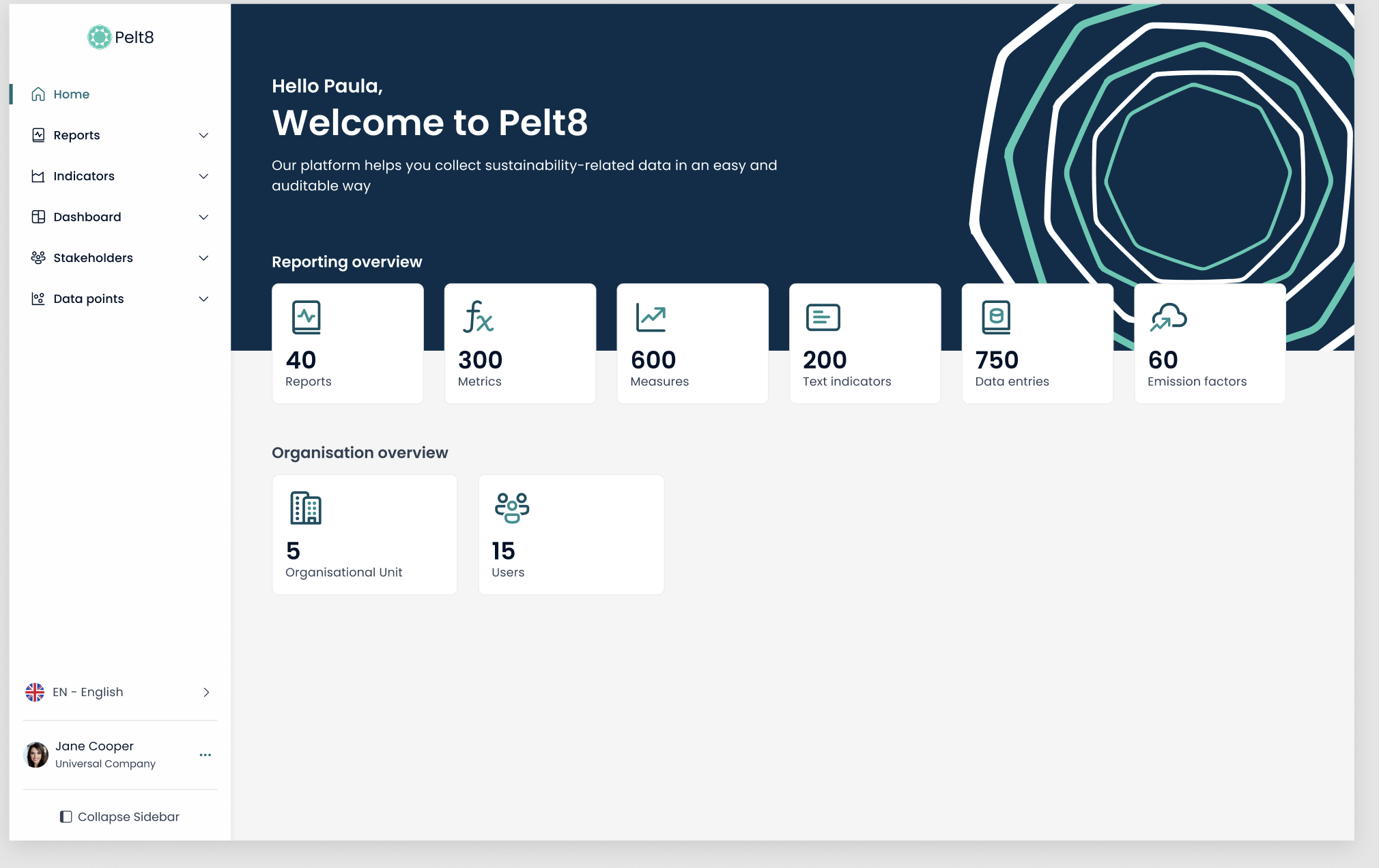
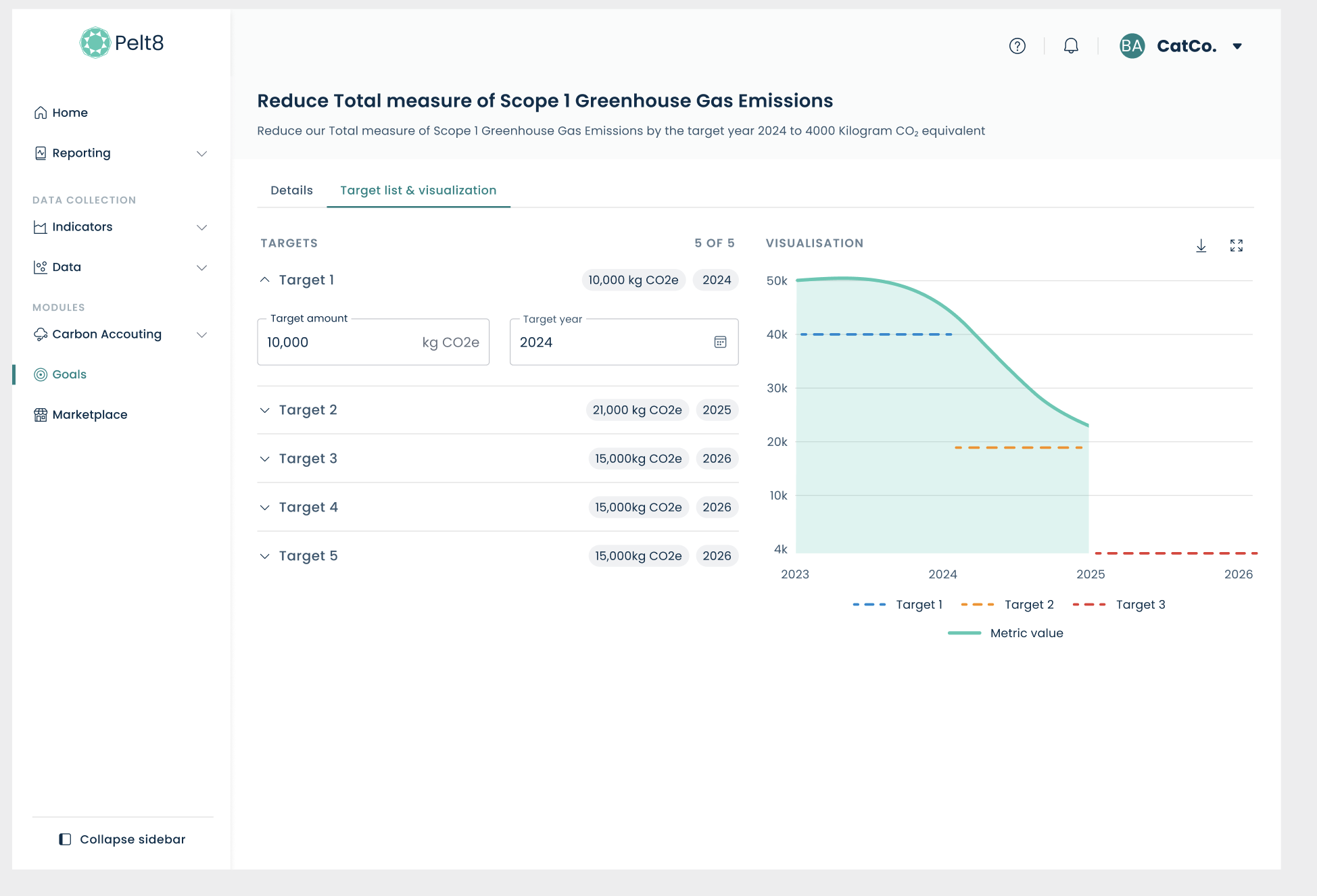
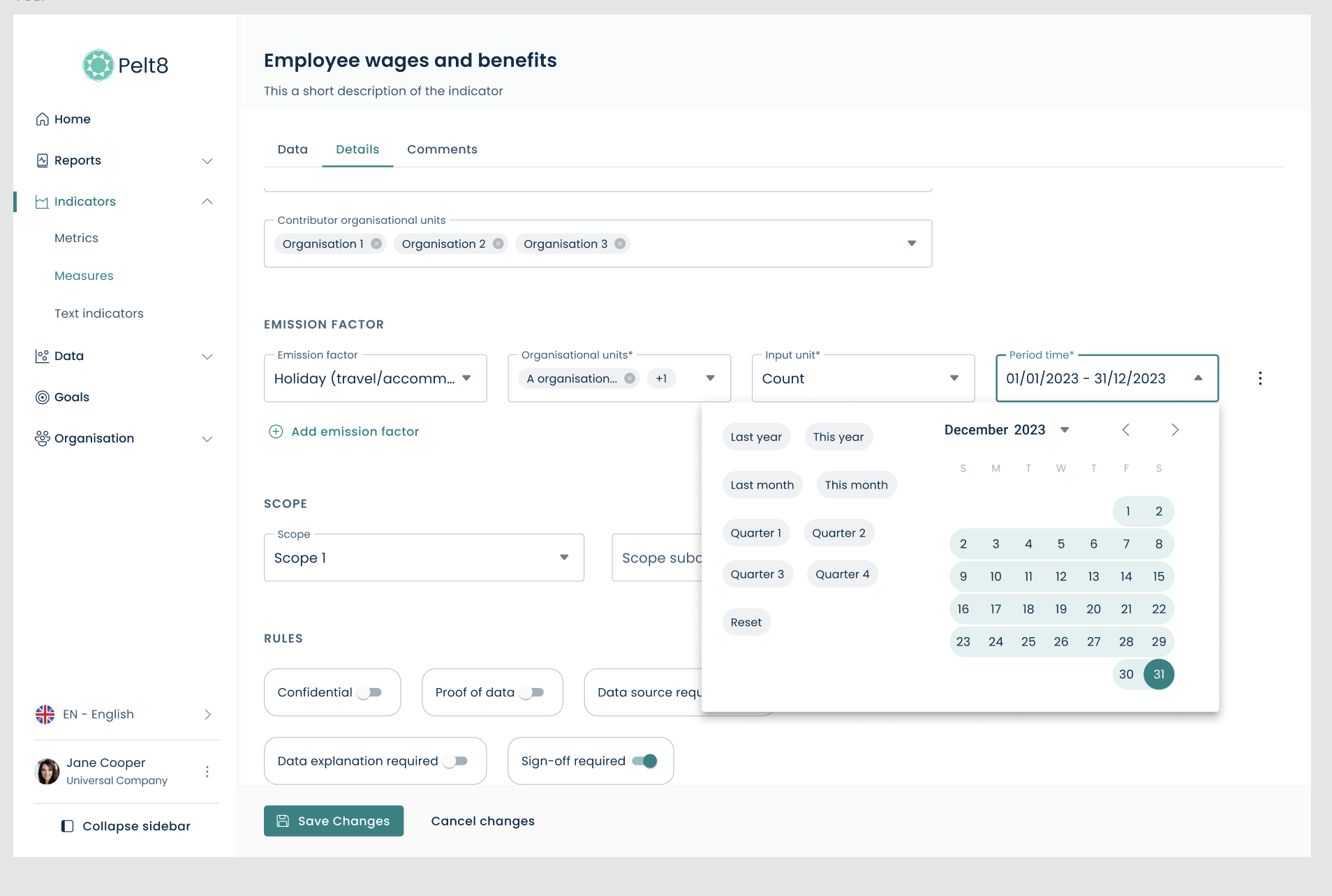
In 2023, pelt8 won both the Swiss FinTech Award and the Swiss InsurTech Award, and the company went on to raise CHF 1 million and to count more than 25 enterprise clients, among them PostFinance, AXA, Mobiliar, Climeworks, Kantonsspital Luzern and ETH Zürich. Its product collected non-financial data at the source for companies facing reporting duties under the EU’s Corporate Sustainability Reporting Directive (CSRD), and it lost much of its target segment within months when the funding and regulatory climate for ESG shifted. The company was sold to Atlas Metrics.
From consolidated accounts to non-financial data
The motivation to found pelt8 came out of an acquisition at a previous job: a private-equity-led consolidation in which a large company acquired several others, and reconciling everyone’s financial reporting into one picture proved extremely cumbersome. With a background in political science and prior work in sustainable finance, I read the regulatory landscape as about to shift, requiring companies to report non-financial data as well. If group-wide financial reporting was already this painful, then aggregating and reporting non-financial data, especially for smaller companies, looked like an even larger unsolved problem.
The gap between collecting and finding
The first problem was explaining to companies which non-financial data they needed to collect at all, driven by the CSRD and by CO2-reporting requirements cascading down the supply chain. The popular framing treats the difficulty as one of scarcity. A closer look showed the opposite: the data was often already being collected somewhere in the organisation, just not in a form that anyone could find or use.
The remaining challenge was ownership, meaning the setting of responsibilities and workflows to gather the data. Collection was typically decentralised and manual, still handled largely through Excel, and consequently cumbersome and error-prone. The goal was a simple front end that could collect data at the source and support more modular reporting, weekly instead of only annual, wherever the underlying data allowed it.
Between 500 and 2,500 employees
The work began with a simple set of KPIs, informed by regulatory requirements and by what was flowing through the supply chain, using an approach similar to that of Project Savannah, the Singaporean initiative of the Monetary Authority of Singapore (MAS) on common ESG metrics for small and medium-sized enterprises. The MVP was specified to collect and upload data sheets from a range of sources rather than to build direct integrations, since the diversity of places where client data lived made integrations impractical at an early stage.
The target segment shifted in the same period. The initial focus was on smaller companies, but the real pain point proved to sit with companies of between 500 and 2,500 employees: larger companies had the scale to handle the task elsewhere, while smaller companies were not yet subject to meaningful reporting requirements.
Founder and product lead
As founder, I also led the product team, which comprised around six engineers, one designer, one QA engineer and one product owner; this describes the product team only, not the company as a whole. The responsibilities can be grouped as (1) identifying the problem and the regulatory shift behind it; (2) defining the initial KPI set; (3) specifying an MVP built on data-sheet upload; (4) locating the segment where the pain was real; and (5) leading the product team as product lead.
The outcome comprised CHF 1 million raised, more than 25 enterprise clients, the Swiss FinTech Award 2023 and the Swiss InsurTech Award 2023.
Closing the chapter
The decision to sell pelt8 to Atlas Metrics followed a sharp change in the ESG and sustainability funding climate. In my reading, the election of Donald Trump in the United States triggered a broader pullback in interest and capital for ESG topics, and the EU followed in 2025 with an omnibus package that rolled back CSRD compliance requirements. Between the two, much of pelt8’s target segment, companies newly obliged to report non-financial data, fell away within a matter of months.
The wider ESG-tech space consolidated hard in response, and pelt8 sold its assets into that wave rather than continue to chase a shrinking market. The consolidation did not stop there: for context, Atlas Metrics was itself acquired by Novata in October 2025, and much of the field from that era has since been absorbed in the same way. In hindsight, it was the right moment to close the chapter.
Screenshots